SEO Case Study
Congress of Neurological Surgeons (CNS.org)
Repositioning a Prestigious Brand for Search Visibility & Member Engagement

Background
The Congress of Neurological Surgeons (CNS) is a leading academic society for neurosurgeons, offering education, research, and advocacy. While the brand had high offline recognition, its digital presence was underperforming, particularly in organic search visibility.
The Challenge
Despite strong content and a respected brand name, CNS.org was not ranking well for key queries. For example:
- The full organization name “Congress of Neurological Surgeons” had low search volume.
- Users were far more likely to search for “CNS”, “CNS neurosurgery”, or “CNS education portal.”
In addition, major landing pages suffered from:
- Poor SEO structure (missing H1 tags, duplicate headers)
- Nonstandard naming conventions
- Disorganized navigation and low usability
- High bounce and quick back rates
- Low CTR for key components like the CNS+ app and SANS exams

SEO Strategy
Landing Page Refresh & Structural SEO

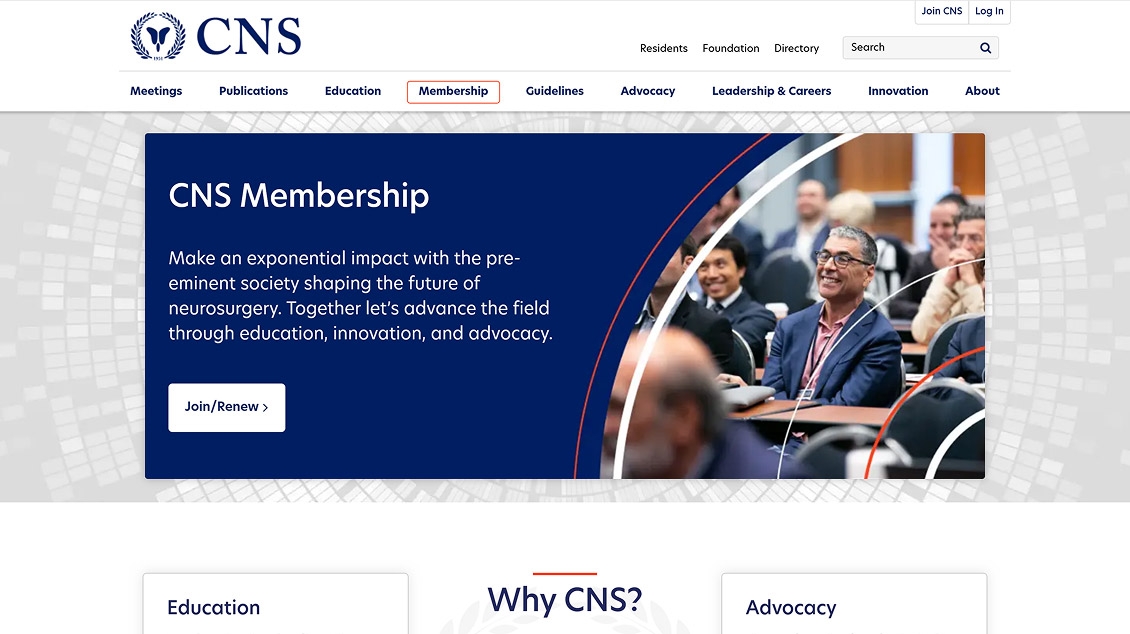
Standardized HTML elements (H1s, H2s, meta tags)
Removed duplicate headings and optimized page titles (e.g., renaming “CNS Featured Education” to “Education Overview”)
Improved component hierarchy and styling to reduce bounce and increase time-on-page
Content Realignment
Reviewed and sunset outdated/low-traffic pages (~20,000 pages had <30 views/year)
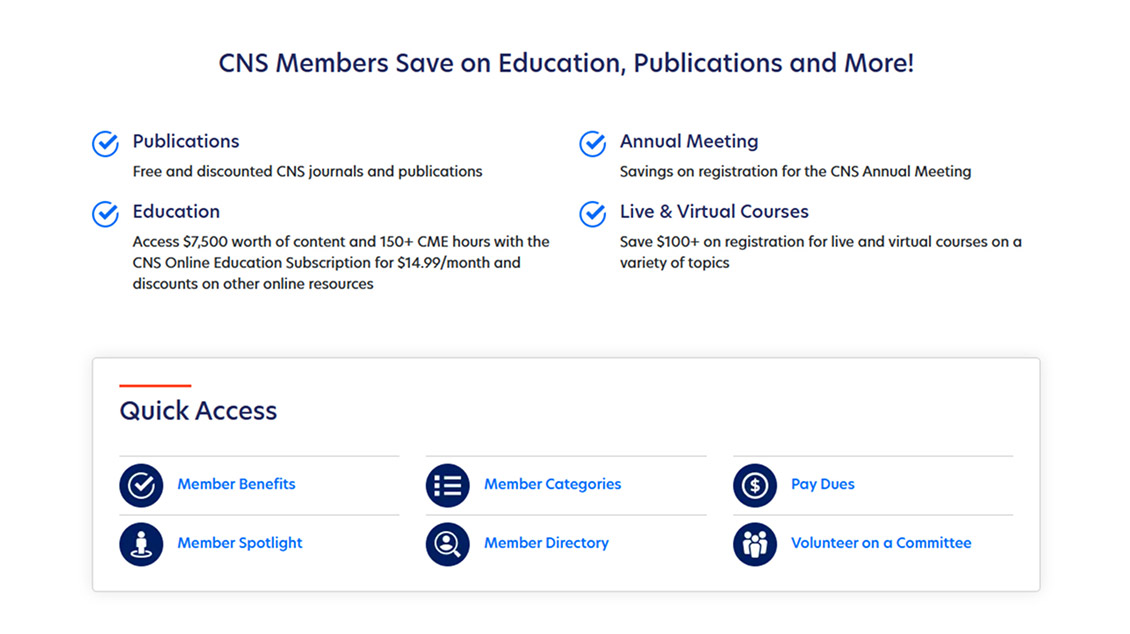
Updated key sections like Membership, Education, Advocacy, Guidelines, and Residency to reflect user behavior and current search trends
Implemented FAQ schema and SEO-friendly copy on high-traffic pages
Landing Page Refresh & Structural SEO

Key Insight
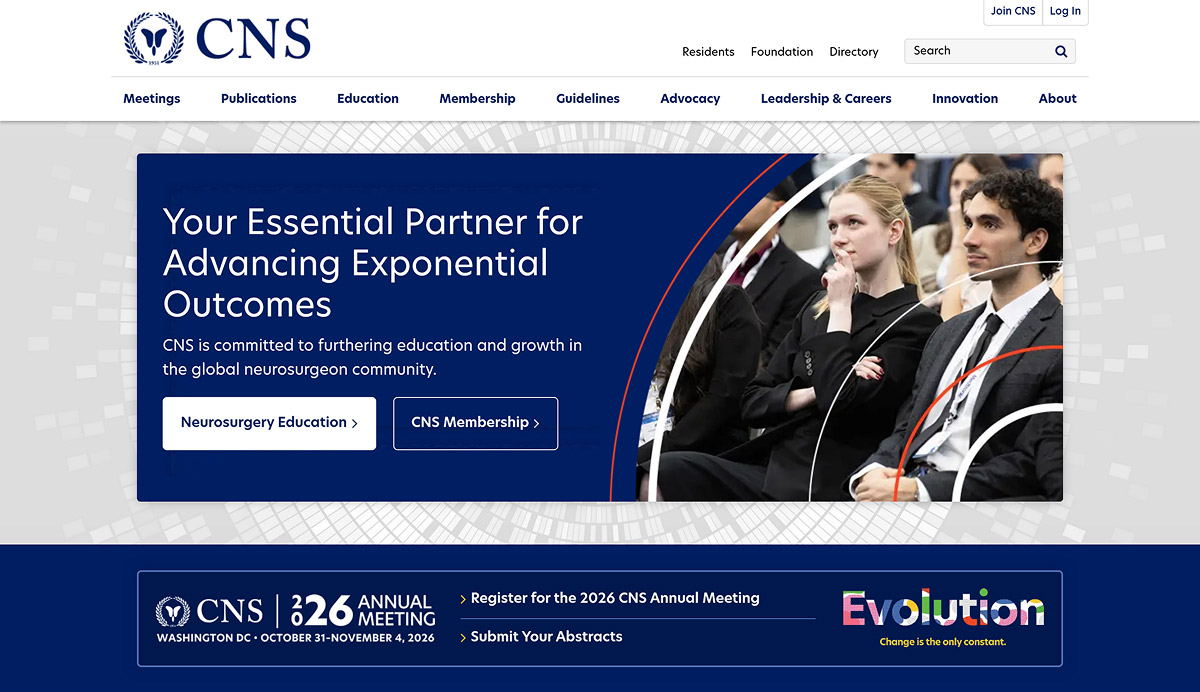
No one was searching for “Congress of Neurological Surgeons.”

Fix
We added “CNS” prominently in the homepage header, meta titles, and landing page H1s.

Results
CNS began ranking #1 for “CNS” and related neurosurgery terms, which previously returned mixed or irrelevant results.
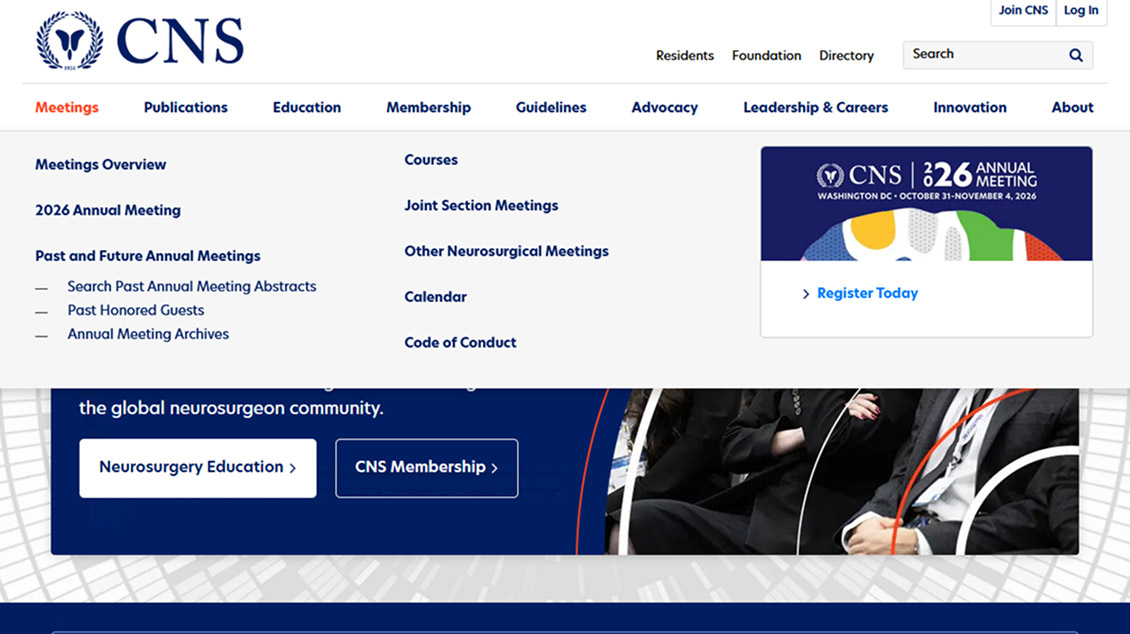
Navigation and UX Overhaul
Analyzed 143,151 navigation clicks (via GTM) to eliminate redundancy
Merged or removed low-performing submenus (e.g., multiple “Leadership” and “Sections” links)
Improved visual hierarchy of menu items
Reduced user rage clicks and quick backs by streamlining interfaces
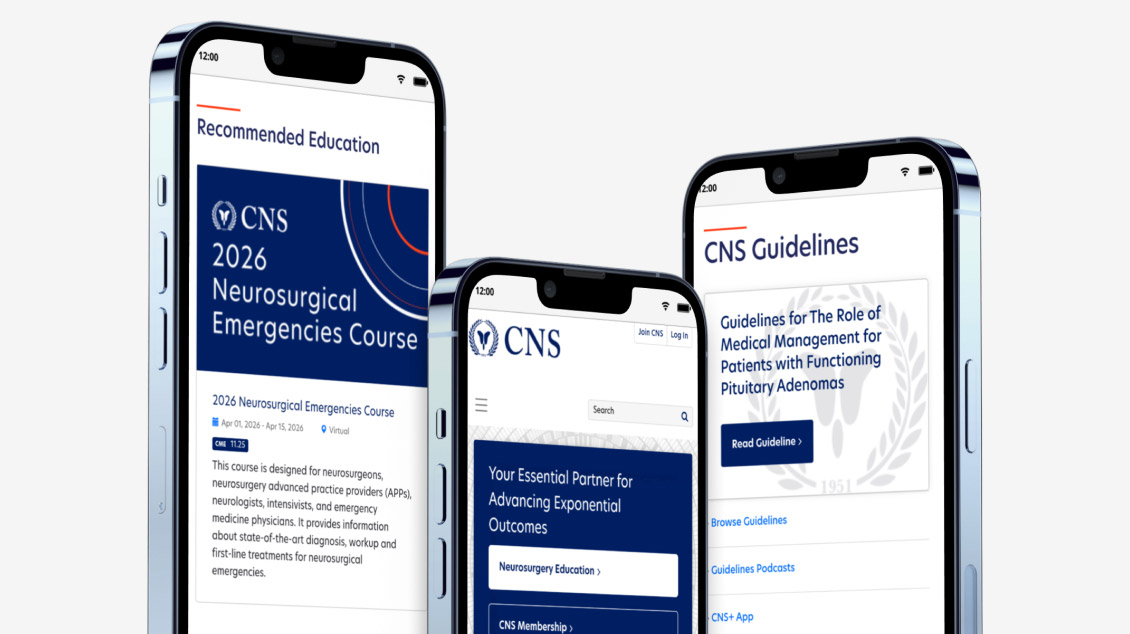
Mobile Optimization & Style Fixes
Resolved mobile spacing and alignment issues
Optimized banner and promo components to avoid “ad blindness”
Addressed poor mobile interaction on high-traffic areas like My Education, My CME, and Login
Results
After implementing the redesign and SEO strategy:

#1 search position
for “CNS” and “CNS neurosurgery”

Increased organic traffic
to education and membership pages

Lower bounce rate
and improved engagement metrics (especially for mobile users)

More accurate search indexing
reducing misrouted or outdated URLs

Increased engagement
with previously buried pages based on navigation click data
Key Takeaways
1
SEO is not just metadata.
It’s a combination of structure, content, and user behavior.
2
Understand your brand’s real-world language.
In CNS’s case, the acronym was the asset.
3
Clean up the clutter.
Removing or merging underperforming pages helps Google focus on your core content.
4
User data drives design.
Heatmaps, click tracking, and scroll depth showed where engagement broke down and where to fix it.
5
Design matters.
Fixing visual cues (e.g., turning “banner-style” promos into embedded elements) boosted interaction.
Tools Used
- Google Analytics & Google Search Console
- Microsoft Clarity (rage clicks, quick backs, dead clicks)
- SEMRush & Keyword Planner
- GTM Event Tracking
- Schema Markup Validator
Ready to build something that matters?
Let’s talk. We’d love to hear what you’re working on.
(Call us at 301-694-0273 or email us at hello@goclerate.com)